
Genicular artery embolization for knee osteoarthritis: questions and answers
Genicular artery embolization (GAE) is the minimally invasive treatment that acts on the inflammatory and vascular component of knee osteoarthritis pain. Here are the answers to the questions patients ask most often, before and after the procedure.
Do you recognise these symptoms?
- Pain that worsens going up or down stairs
- Stiffness in the morning or after sitting for a long time
- Recurrent swelling of the knee
- Night pain that disturbs sleep
What is genicular artery embolization (GAE)?
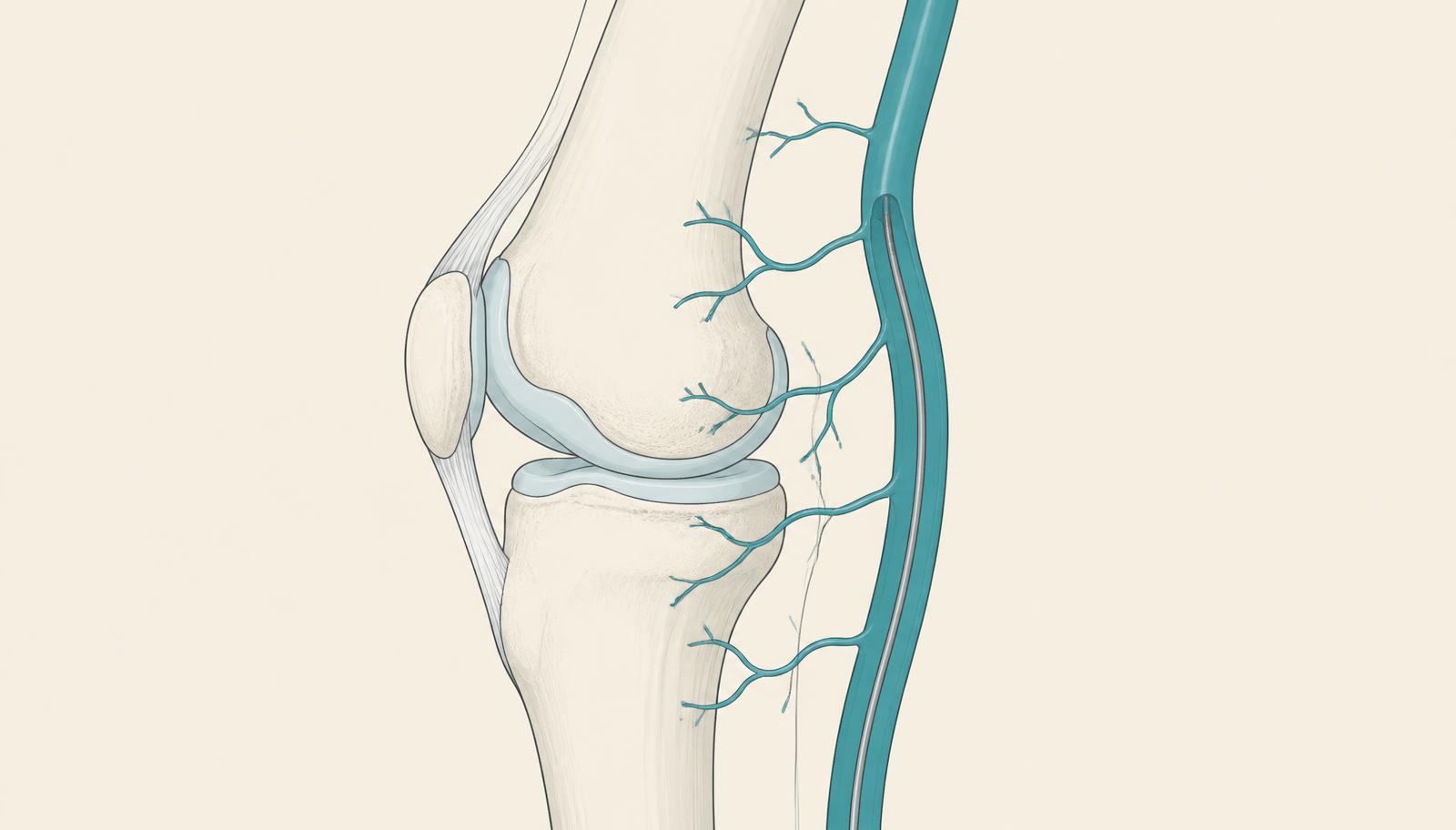
It is an interventional radiology procedure that acts on the vascular cause of osteoarthritic pain, also known in the literature as TAME (transcatheter arterial micro-embolization). In osteoarthritis the synovial membrane becomes inflamed and develops a network of abnormal small vessels, accompanied by new nerve endings that amplify pain: GAE selectively closes these vessels with microparticles, reducing inflammation and, with it, pain.
How is the procedure performed?
Through an arterial access of a few millimetres, usually at the groin or the wrist, a microcatheter is guided to the genicular arteries feeding the painful area of the knee. It is performed under local anaesthesia, takes about 60-90 minutes and is a day-surgery procedure: you are discharged a few hours after the intervention.
Who is a good candidate?
It is mainly indicated for mild-to-moderate knee osteoarthritis, with pain resistant to medication, physiotherapy and standard injections, in patients who are not candidates for a prosthesis or who wish to postpone it. In selected cases it is also used for persistent pain after a knee replacement.
What to expect after the procedure?
The pain benefit is not immediate: it develops over a few weeks, as inflammation subsides. The effect can last from a few months up to a year, and in many patients allows anti-inflammatory drug use to be reduced or stopped. It does not rebuild cartilage: it acts on pain and function, not on the osteoarthritis itself.
Treatments we can perform
Knee
Genicular artery embolization (GAE)
A minimally invasive procedure for osteoarthritis: the small inflammatory vessels of the knee are closed. Indicated when injections and physiotherapy are not enough and replacement surgery is not yet indicated.
Read about the procedureKnee
Ultrasound-guided injections
Hyaluronic acid placed with ultrasound precision inside the joint.
Read about the procedureFrequently asked questions
Does the embolization hurt?
It is performed under local anaesthesia at the access site; discomfort during the procedure is generally mild.
How long does the procedure take, and is admission needed?
It takes about 60-90 minutes, as a day-surgery procedure: you are discharged a few hours later, the same day.
How soon will I feel an improvement?
The benefit is not immediate: it develops gradually over a few weeks, as inflammation subsides.
How long does the effect last?
It varies from person to person: the beneficial effect can last from a few months up to about a year.
Does it replace a knee prosthesis?
No: it does not rebuild cartilage. It is an option to reduce pain and postpone a prosthesis, not a definitive alternative once the joint is already severely damaged.
Who is a good candidate?
Someone with mild-to-moderate knee osteoarthritis whose pain no longer responds to medication, physiotherapy and injections, and who is not yet a candidate for a prosthesis or wants to postpone it. The precise indication is assessed during a consultation, with X-rays and MRI.
Can the treatment be repeated?
Yes, if pain recurs after the initial effect wears off, the procedure can be reassessed and repeated.
Want to know if it is your case?
At the first consultation we review your clinical history and previous imaging together.
Other guides
The information on this page is for general guidance and does not replace a medical consultation. The indication for treatment must always be assessed individually.