
Image-guided care
Treating painwithout a scalpel.
Joint pain of the shoulder, elbow, back, hip, knee and ankle, varicocele, uterine fibroids and pelvic pain: there are minimally invasive treatments, such as ultrasound-guided injection, that treat the problem through a percutaneous access, avoiding surgery and scars. Touch the part of the body where you feel pain and discover which treatments we can perform.
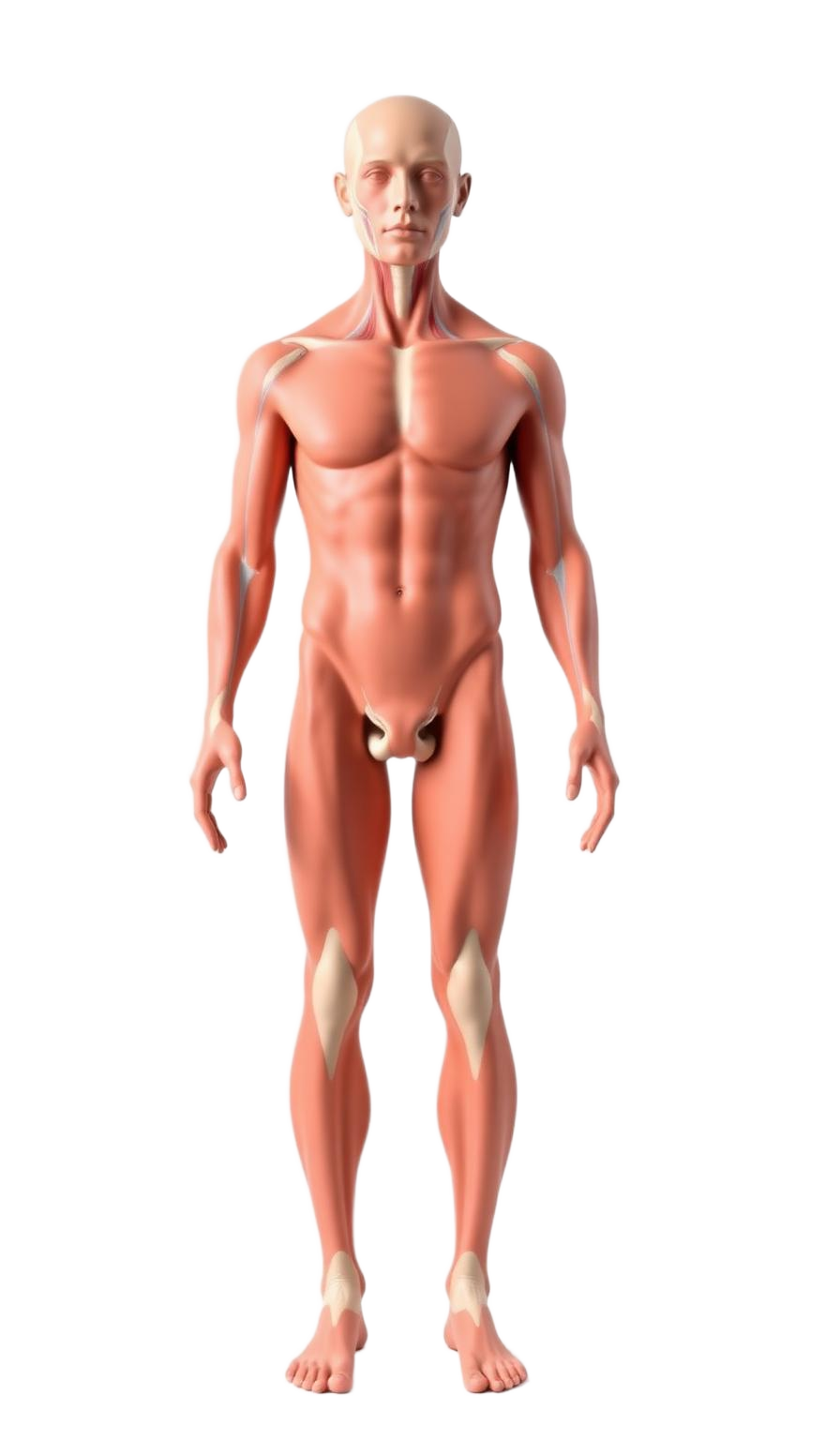
Tap a point to see the available treatments
Where does it hurt?
Tap a point to see the available treatments
Body areas
Conditions treated — Elbow
- Lateral epicondylitis (tennis elbow)
- Medial epicondylitis (golfer's elbow)
- Wrist extensor/flexor tendinopathy
Elbow
Minimally invasive procedures available
Patient guides
In-depth articles written in plain language, starting from the symptom: what causes the pain, when a minimally invasive treatment makes sense and what to expect.
Varicocele: can it be treated without surgery
Percutaneous embolization with cyanoacrylate: no cut, no general anaesthesia, home the same day. Comparison with surgery and answers to the most common questions.
Read the pageEmbolization: what it is, how it works and how much it costs
The complete article: what embolization is, which conditions it is used for, how it is performed step by step, the risks and how costs work.
Read the articleEmbolization or surgery for varicocele? Less invasive, no incisions: what the literature says
For varicocele there are two main paths: surgery (vein ligation, open, laparoscopic or microsurgical) and percutaneous embolization, performed by the interventional radiologist through a venous puncture. They are not the same thing: here is an honest comparison, based on published scientific literature, of the real advantages and limits of each.
Read the guideUltrasound-guided lavage or shockwave therapy for shoulder calcification? What the literature says
For rotator cuff calcification, two minimally invasive treatments are often compared: ultrasound-guided lavage (barbotage) and extracorporeal shockwave therapy (ESWT). They are not equivalent: the scientific literature and the UK's NICE guidance point to meaningful differences in the strength of the efficacy evidence and in safety. This article summarises what the sources say, with citations.
Read the guidePeripheral arteriovenous malformations: questions and answers
Peripheral vascular malformations are congenital abnormalities of the blood vessels in the limbs and soft tissue, treatable percutaneously without surgery. Here are the answers to the most common questions about diagnosis and treatment — a different topic from cerebral arteriovenous malformations, which are managed by neurosurgery.
Read the guideGenicular artery embolization for knee osteoarthritis: questions and answers
Genicular artery embolization (GAE) is the minimally invasive treatment that acts on the inflammatory and vascular component of knee osteoarthritis pain. Here are the answers to the questions patients ask most often, before and after the procedure.
Read the guideUterine fibroid embolization: questions and answers
Uterine artery embolization is the minimally invasive alternative to surgery for treating uterine fibroids while preserving the uterus. Here are the answers to the questions patients ask most often, before and after the procedure.
Read the guideVaricocele embolization: questions and answers
Embolization is the reference minimally invasive treatment for varicocele: it is performed through a venous puncture, without surgical incision or general anaesthesia. Here are the answers to the questions patients ask most often, before and after the procedure.
Read the guideShoulder calcification lavage: questions and answers
Calcification lavage, also called barbotage, is the ultrasound-guided treatment that literally dissolves rotator cuff calcification in water. Here are the answers to the questions patients ask most often, before and after the procedure.
Read the guideRhizarthrosis: thumb-base pain and ultrasound-guided injection in Milan
Rhizarthrosis is osteoarthritis of the joint at the base of the thumb, which we use to open a jar, turn a key or grip an object. Pain may begin only during gripping and later become persistent, with loss of strength and stiffness. When a brace, physiotherapy and medication are not enough, ultrasound-guided injection is a minimally invasive option for delivering treatment directly into the joint.
Read the guideTennis elbow (epicondylitis): ultrasound-guided treatment in Milan
Tennis elbow, or lateral epicondylitis, does not affect only those who play tennis: it is typical of those who use a mouse and keyboard for long hours, of craftsmen, hairdressers and anyone who repeats gripping movements. Pain on the outer side of the elbow can last months and make even lifting a cup difficult.
Read the guideUterine fibroids: embolization as an alternative to surgery in Milan
Uterine fibroids can cause very heavy periods, anaemia, a feeling of heaviness in the lower abdomen, and increased urinary frequency. Uterine artery embolization makes it possible to treat them while preserving the uterus, through a percutaneous access and without surgery.
Read the guideVaricocele: embolization without surgery and without general anaesthesia in Milan
Varicocele is the dilation of the veins of the testicle, usually on the left. It can cause a feeling of heaviness, pain that increases towards the end of the day and changes on the semen analysis. Embolization makes it possible to treat it through a venous puncture, without a surgical incision and without general anaesthesia.
Read the guideHeel pain and plantar fasciitis: options without surgery in Milan
Heel pain that strikes with the first step in the morning, eases as you walk and returns at the end of the day is the typical picture of plantar fasciitis. It is a condition that can last months and resist orthotics, stretching and shockwave therapy: in these cases there are image-guided minimally invasive treatments.
Read the guideChronic low back pain: ultrasound-guided injections in Milan
Low back pain that has lasted for months is not all the same. Before talking about surgery it is essential to understand which structure generates the pain: the facet joints, the sacroiliac joint, tight paraspinal muscles, the piriformis muscle or the iliopsoas. From this distinction depends the treatment, and often the targeted ultrasound-guided injection is at once diagnostic and therapeutic.
Read the guidePainful shoulder and tendon calcification: available treatments in Milan
A painful shoulder that stops you sleeping on your side, fastening your bra behind your back or reaching an object on a high shelf often has a clearly identifiable cause on ultrasound: a calcification of the rotator cuff tendon, subacromial bursitis or adhesive capsulitis (the so-called frozen shoulder). All are conditions treatable with a needle, under ultrasound guidance.
Read the guideKnee pain from osteoarthritis: what to do before a prosthesis in Milan
Knee pain from osteoarthritis (gonarthrosis) is one of the most common reasons for a consultation. When anti-inflammatory drugs, physiotherapy and standard injections are no longer enough, many people are told that the only option is a prosthesis. In reality, between drug therapy and surgery there is a range of minimally invasive treatments performed with a needle or a small percutaneous access, without cuts and without scars.
Read the guideThe pathway, step by step
First consultation
We review your clinical history and previous imaging together to understand the real source of your pain.
Imaging assessment
Ultrasound, CT or MRI guide the choice of the procedure best suited to your case.
Minimally invasive procedure
Ultrasound-guided treatments are performed as outpatient procedures. Most endovascular treatments are day-hospital procedures: you come in the morning and go home in the afternoon, with someone accompanying you.
Back home
In most cases you go home the same day, with a planned follow-up schedule.
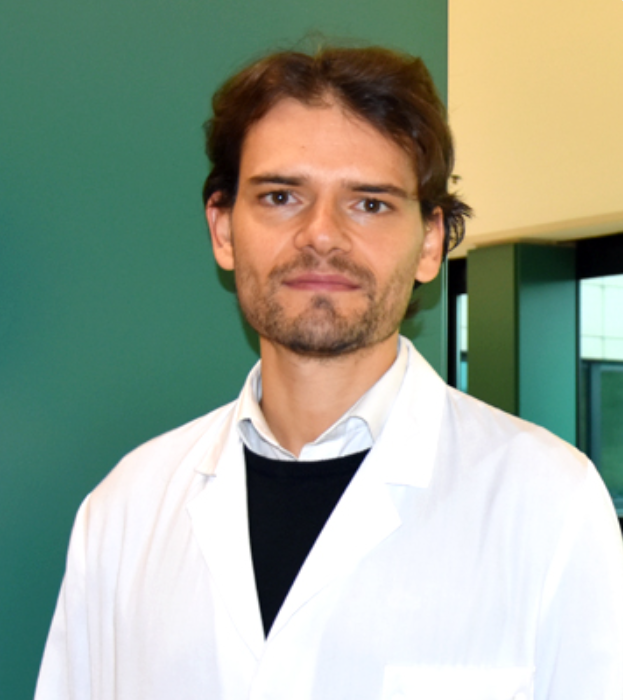
About me
I am Prof. Ezio Lanza, diagnostic and interventional radiologist, EBIR-certified (European Board of Interventional Radiology). I am Associate Professor at Link Campus University, Head of Interventional Radiology at Ospedale San Giuseppe - Multimedica in Milan, and Inter-site Coordinator of Interventional Radiology for the Multimedica Group. I have over 12 years of clinical experience at IRCCS Humanitas Research Hospital, where I worked from 2014, and I maintain an ongoing scientific collaboration with Humanitas University.
My daily practice is image-guided minimally invasive pain treatment: ultrasound-guided injections, lavage of shoulder calcifications, pain and varicocele embolization. I am also the author of international studies on these very procedures: this means proposing only what the evidence truly supports, explaining clearly what to expect — and when a treatment is not indicated.
I am a member of the Interventions Subcommittee of the ESSR — the European Society of Musculoskeletal Radiology — the group that since 2014 has promoted education, standards and research in image-guided percutaneous interventional procedures.
10,100+
interventional procedures performed as first operator
12+ years
of clinical experience, between IRCCS Humanitas Research Hospital and Ospedale San Giuseppe - Multimedica
67 papers
international scientific publications, H-index 19
Associate Prof.
at Link Campus University
Frequently asked questions
Let's talk about your pain, before deciding.
The first consultation is there to understand whether a minimally invasive treatment is indicated in your case. Please bring your imaging studies and the list of medications you take.