
Uterine fibroid embolization: questions and answers
Uterine artery embolization is the minimally invasive alternative to surgery for treating uterine fibroids while preserving the uterus. Here are the answers to the questions patients ask most often, before and after the procedure.
Do you recognise these symptoms?
- Very heavy or prolonged periods
- Iron-deficiency anaemia with persistent tiredness
- A sense of heaviness or bloating in the lower abdomen
- Frequent urination or difficulty emptying the bladder
What is uterine fibroid embolization?
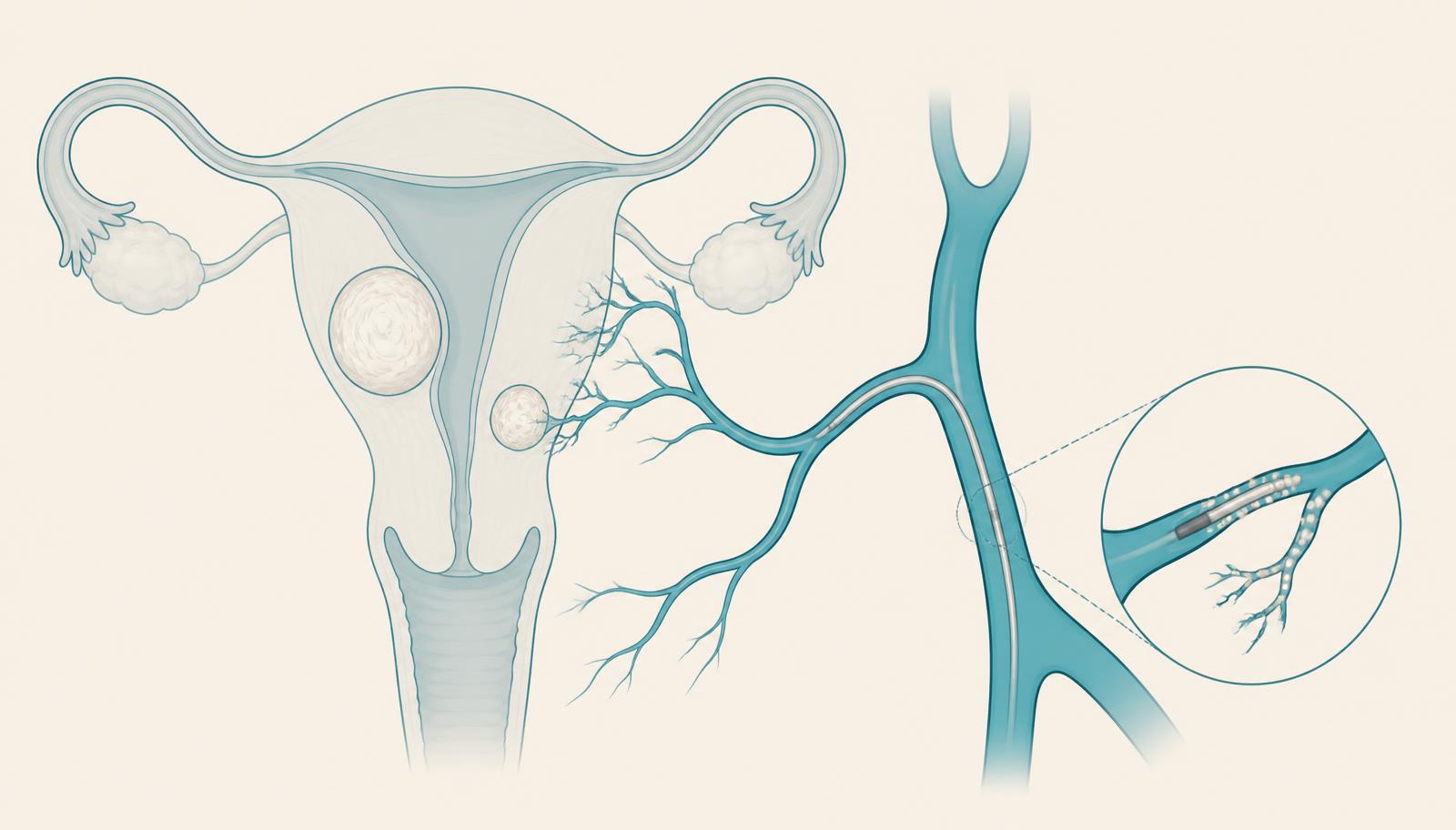
It is an interventional radiology procedure that treats fibroids without surgically removing them. Through a puncture of the femoral artery, the interventional radiologist navigates a catheter to the vessels feeding the fibroids and injects microparticles that block their blood supply: deprived of nourishment, the fibroids progressively shrink.
How is the procedure performed?
It is performed under local anaesthesia at the femoral access point, with continuous sedation throughout the procedure to make it as comfortable as possible. No surgical incision is required: the access is a simple puncture.
How long is the hospital stay?
Unlike other embolizations performed as day cases, uterine fibroid embolization involves a short observation admission of about two nights, useful for managing post-procedural pain in the first hours. You are discharged on day three and can return to normal daily activities, with some limitations in the following days.
What happens afterwards?
In the first few days, some blood loss even outside the menstrual cycle is normal: it is part of the expected course and related to the fibroid's progressive necrosis. A clear reduction in pain and menstrual bleeding is usually noticeable already within the first month. An MRI scan is performed around three months after the procedure to check the reduction in fibroid size.
Treatments we can perform
Frequently asked questions
Do I keep my uterus?
Yes: unlike a hysterectomy or myomectomy, the goal of embolization is to control symptoms while preserving the organ.
How long is the hospital stay?
Usually about two nights of observation, with discharge on day three and a return to daily activities, albeit with some initial limitations.
Is it normal to have blood loss after the procedure?
Yes, some blood loss even outside the menstrual cycle is normal in the first few days, related to the fibroid shrinking process: it is part of the expected course.
When will I see results?
Improvement in pain and menstrual bleeding is usually noticeable already within the first month; the reduction in fibroid volume is then documented with an MRI scan at around three months.
Can every patient with fibroids have embolization?
No: not every patient is an ideal candidate. The indication depends on the number, location and size of the fibroids and is assessed with a pelvic MRI, together with the gynaecologist.
Is it an alternative to surgery?
Yes: it is mainly indicated for those who wish to avoid a hysterectomy or myomectomy, or who are not ideal surgical candidates.
Can I still become pregnant after embolization?
This must be assessed case by case together with the gynaecologist: embolization is generally offered to women who do not wish for a future pregnancy, and the indication for patients who do requires a dedicated pathway.
Want to know if it is your case?
At the first consultation we review your clinical history and previous imaging together.
Other guides
The information on this page is for general guidance and does not replace a medical consultation. The indication for treatment must always be assessed individually.